

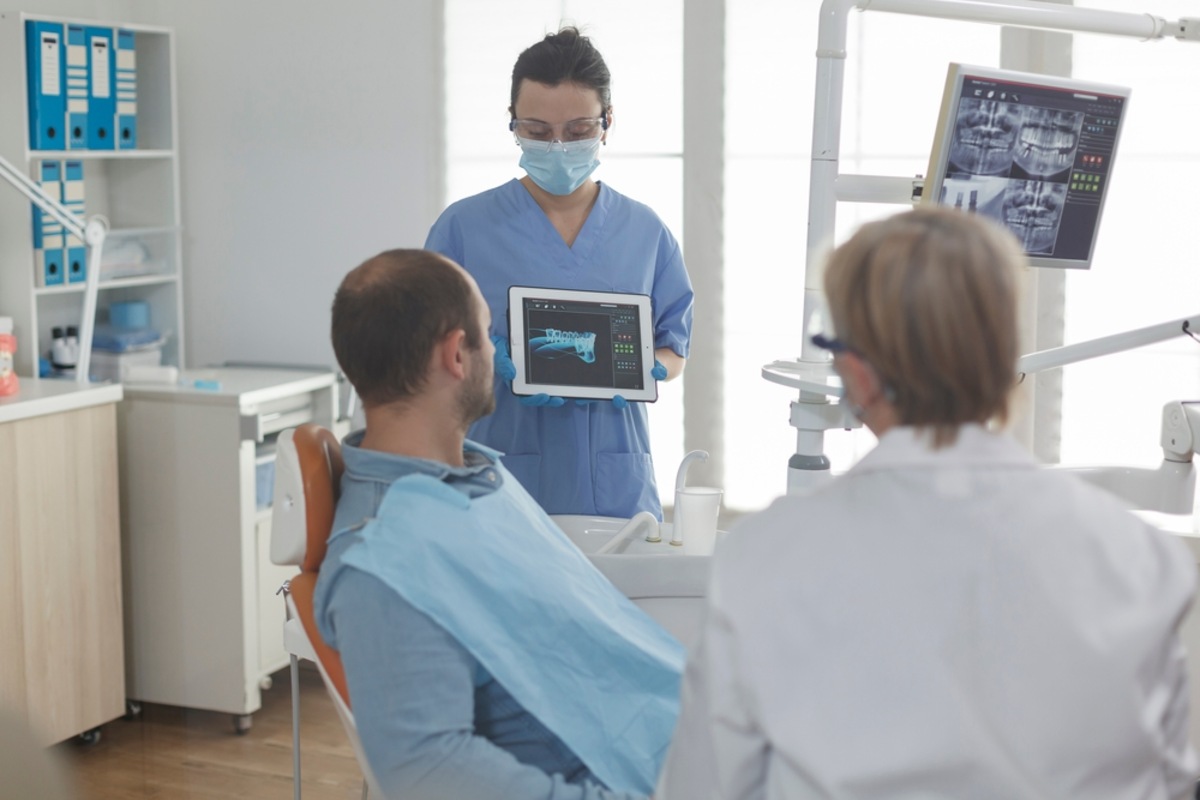
Most people know that a dentist checks teeth and gums. But did you know that a dentist in Airdrie also looks for signs of oral cancer during a routine visit? This part of the checkup is called an oral cancer screening. It does not take long, and it does not hurt. But it can save a life.
Here is a simple, clear look at what happens during an oral cancer screening and why it matters.
What Is Oral Cancer?
Oral cancer is a type of cancer that can grow in the mouth. It can appear on the tongue, lips, gums, the floor of the mouth, the roof of the mouth, or the inner cheeks. Like most cancers, it is much easier to treat when it is found early.
Who Should Get Screened?
Anyone can get oral cancer. But some people have a higher risk. This includes people who:
- Use tobacco in any form (cigarettes, cigars, chewing tobacco)
- Drink alcohol heavily
- Have had a lot of sun exposure on the lips
- Have had the human papillomavirus (HPV)
- Are over the age of 40
Even if none of these apply to a person, a dentist near you can still perform a screening as part of a regular dental checkup. It is a simple and smart habit.
What the Dentist Does During a Screening
Step 1 – The Visual Examination
The dentist starts by carefully examining the mouth. Using a small light and sometimes a mirror, the dentist checks all the soft tissues. This includes:
- The tongue (top, bottom, and sides)
- The gums
- The inner cheeks
- The roof and floor of the mouth
- The back of the throat
- The lips
The dentist is looking for anything that does not look normal. This could be red patches (called erythroplakia), white patches (called leukoplakia), sores that have not healed, or lumps.
Step 2 – The Physical Examination (Palpation)
After the visual check, the dentist uses gloved hands to feel the tissues inside the mouth and around the jaw and neck. This is called palpation.
The dentist gently presses on the lymph nodes under the jaw and along the neck. Swollen or hard lymph nodes can sometimes indicate that something is wrong.
The dentist also feels the tongue and the floor of the mouth to check for any unusual lumps or thick areas.
Step 3 – Additional Screening Tools (If Needed)
Some dental clinics use special tools to get a better look. These may include:
- Fluorescent light devices – A special blue light is used to examine tissues. Healthy tissue looks different from abnormal tissue under this light.
- Oral rinses – A special rinse may be used to highlight any abnormal cells.
These tools are not always used at every visit, but they can help a dentist near you catch problems that the eye alone might miss.
What Happens If Something Looks Unusual?
Finding something unusual does not mean a person has cancer. Minor injuries, infections, or irritation cause many sores and spots in the mouth. But if a dentist sees something that needs closer inspection, the patient may be referred to an oral surgeon or another specialist for a biopsy. A biopsy means a small piece of tissue is removed and tested in a lab.
How Long Does the Screening Take?
The entire oral cancer screening usually takes only 5 to 10 minutes. It is done as part of a regular dental checkup. There is no extra preparation needed.
Why Skipping This Screening Is a Risk
Oral cancer often has no pain in the early stages. A person may have a small patch or sore and not notice it. That is why visiting a dentist regularly is so important. A dentist is trained to spot things that a person cannot see or feel on their own.
Protect Your Smile With Oral Cancer Screening at Airdrie Choice Dental.
We provide simple oral cancer screening to check the mouth, lips, tongue, and throat for early signs of disease. During the visit, our dentist uses a light and gentle examination to look for sores, white patches, or unusual tissue changes. Book your appointment with our dental team today.
FAQs
Does an oral cancer screening hurt?
No. The exam is completely painless. The dentist only uses light, mirrors, and their fingers to look and feel for changes.
How often should someone get screened?
It is best to have a screening every time a person goes for a dental cleaning, which is usually every six months.
Can children get oral cancer screenings?
Yes. While oral cancer is more common in adults, dentists check everyone’s mouth to make sure the skin and gums are healthy.