

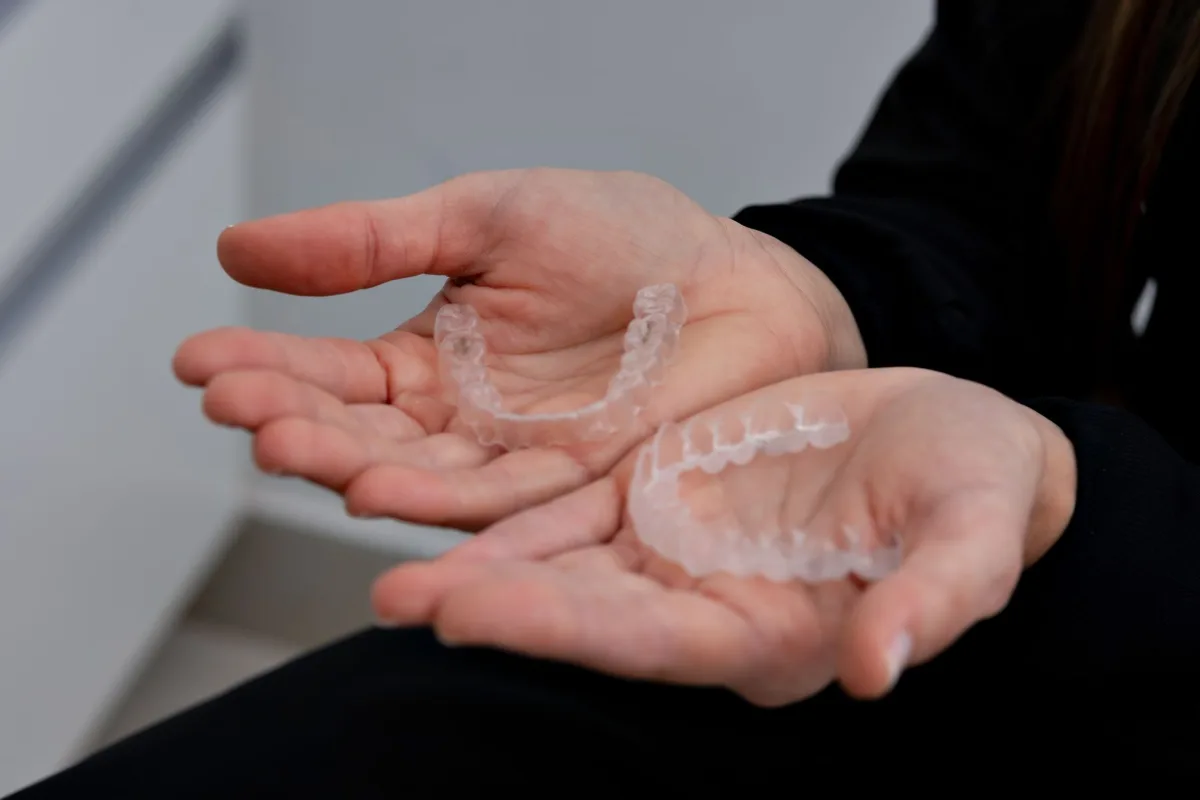
Yes, most people with several fillings can start Invisalign. Fillings rarely stop treatment, but your dentist should check each one first. If you are thinking about Invisalign in Airdrie, a short exam will show whether your fillings are in good shape.
Why Do Fillings Make People Nervous?
It is normal to worry. Patients often ask, can I get Invisalign with fillings, because they think aligners only suit “perfect” teeth. That is not true.
Aligners work by slowly guiding teeth into new positions. The tooth moves, and the filling moves with it. Here are the worries people share most:
- Will my filling come loose?
- Will the trays still fit well?
- Can attachments be placed on a filled tooth?
- Will an old filling need to be replaced?
How Do Fillings and Aligners Work Together?
Do Fillings Change How Teeth Move?
People also ask, do dental fillings affect Invisalign treatment in a big way? In most cases, they do not. Tooth movement depends on the root and the bone around it. A filling only repairs the crown, the part of the tooth you see. Still, every mouth is different, so your dentist makes the final call.
Can Invisalign Attachments Go on Teeth With Fillings?
Attachments are small, tooth-coloured bumps that help the aligner grip a tooth and guide it. Many dentists can bond them to a healthy, smooth filling, or choose a nearby spot on natural enamel instead. A filling that is cracked or worn will need to be repaired first.
What Will a Dentist Check Before You Begin?
A good exam looks at more than just your fillings. Here is what is usually reviewed.
Filling Condition
- Cracks or chips
- Rough or sharp edges
- Gaps around the edge of the filling
- Signs of decay under the filling
Gum and Bone Health
Healthy gums and bone give your teeth a solid base for movement. If your gums are sore or swollen, they may need care before you start aligners.
Bite and Tooth Position
Your dentist examines how your teeth meet and line up. X-rays and photos help build a clear plan.
Which Fillings May Need Extra Care?
Not all fillings are the same. This table shows common cases.
| Filling Situation | What It May Mean | What May Happen Next |
|---|---|---|
| Small, healthy filling | Usually little concern | Often left as it is |
| Old or worn filling | It may chip with pressure | Repair may be suggested first |
| Large filling | The tooth may be weaker | Extra checks, possibly a crown discussion |
| Decay under a filling | The tooth needs treatment | Treated before aligners begin |
| Filling where an attachment is planned | The spot may not suit it | Attachment may go to another area |
What If a Filling Needs Work First?
Your dentist may advise repairing a filling or treating a cavity before aligners start. It’s a normal step and not a setback. A clean, healthy tooth gives you the best start, and addressing a problem early helps you avoid surprises later.
How Can You Prepare for Your Visit?
Booking a visit with a dentist in Airdrie is a helpful first step, especially if you have many fillings. A dental clinic near you can review your dental history, so bring a list of past dental work if you can and write down any questions before you go.
Good questions to ask:
- Are my fillings strong enough for treatment?
- Will any need to be replaced first?
- Where might the attachments be placed?
- How will you protect my teeth during treatment?
Tips for Daily Care During Treatment
- Wear your trays as your dentist advises, often around 20 to 22 hours a day.
- Brush your teeth before putting trays back in.
- Clean your trays every day.
- Keep up with regular checkups.
- Tell your dentist if a filling feels rough, loose, or sore.
Smile Ready? Start With a Simple Check
Having several fillings does not usually rule out aligner treatment. Most fillings can stay in place, and attachments can often be placed on them. Worn or damaged fillings may need care first, and an exam is the best way to know where you stand.
Airdrie Choice Dental can review your fillings and explain your options in plain words. Every patient is different, and not everyone is a fit for aligners, so a gentle first visit is a good place to start. Book a visit whenever you feel ready, and bring your questions along.
FAQs
Can I get a new filling while I am wearing aligners?
Typically yes, and your dentist can check that your trays still fit well after the procedure.
Can aligners harm my fillings?
Aligners shouldn’t damage sound fillings, and your dentist can check for any wear or breakage at regular visits.
Should I treat cavities before starting?
Yes, decay is normally treated first so teeth are healthy before they move.
Will aligner treatment whiten my fillings?
No, fillings do not change colour, so ask about colour matching before you start.